


What makes one bracelet feel comfortable all day while another feels annoying
by Praijing Jewelry on May 11, 2026

It’s not always about how pretty it looks
A bracelet can be beautiful in the photo, elegant in the box, and still somehow feel wrong the moment you wear it for a few hours.
Maybe it slides too much.
Maybe it feels heavy.
Maybe it catches on your skin or clothes.
Maybe you keep adjusting it without even realizing.
That is because bracelet comfort has very little to do with looks alone.
Some bracelets feel so easy you almost forget they are there. Others become irritating by lunchtime. And the difference usually comes down to a few practical details that most people do not think about until after they buy.
In this post, we’ll look at what actually affects bracelet comfort, why some bracelets work better for daily wear, and how to tell if a piece is likely to feel good all day before you even put it on.
1) Fit is the first reason comfort changes so much
The most common reason a bracelet feels annoying is simple: the fit is off.
If a bracelet is too tight, it can:
-
press into the skin
-
feel restrictive when you bend your wrist
-
leave marks
-
become distracting after a few hours
If it is too loose, it can:
-
spin constantly
-
slide down toward the hand
-
hit surfaces while you move
-
feel messy or unstable
The most comfortable bracelets usually sit in the middle. They feel secure, but not stiff. Present, but not clingy.
That is why sizing matters so much. Even a small difference of half a centimeter can change how a bracelet feels over an entire day.
2) Weight matters more than people expect
A bracelet can look refined and still feel tiring simply because it is heavier than your wrist wants to carry for hours.
Weight changes comfort in a big way, especially if you:
-
type a lot
-
drive often
-
move your hands constantly
-
wear jewelry from morning to evening
Heavier bracelets can sometimes feel luxurious at first, but in real life they may become more noticeable than you want.
A lightweight bracelet, on the other hand, often feels much easier to live in. It becomes part of your day rather than something you keep mentally tracking.
This is one reason why many daily-wear bracelets are designed to feel visually polished without becoming physically “loud.”
3) The way a bracelet moves on the wrist changes everything
Some bracelets move with your body. Others fight it.
A comfortable bracelet usually has movement that feels natural:
-
it follows the wrist gently
-
it stays where it should most of the time
-
it does not twist constantly
-
it does not bump too hard against the hand
An uncomfortable bracelet often does the opposite:
-
it flips too easily
-
it rotates non-stop
-
it shifts in a way that feels distracting
-
it never really settles
This is why bracelet construction matters. The way beads, chains, cords, or links are assembled directly affects how the piece behaves once it is on your body.
Good comfort often comes from good movement, not just good looks.
4) Material affects feel, not just durability
Most people think about material in terms of quality or maintenance. But material also affects comfort.
Different materials can change:
-
weight
-
temperature against the skin
-
smoothness
-
sensitivity
-
flexibility
For example, stainless steel is often preferred for everyday bracelets because it is durable, low maintenance, and can feel clean and structured without being too delicate. Natural gemstones add texture and beauty, but their shape and polish level also affect how soft or firm the bracelet feels.
A highly polished bead may feel smoother on the skin than a rougher-cut stone. A soft cord may feel more flexible than a stiff chain. A slim metal accent may feel subtle, while bulky hardware can become more noticeable throughout the day.
Comfort is often the result of how these materials interact together.
5) Surface texture can quietly make or break comfort
This is a detail many people overlook.
Even when the bracelet fits, the texture of the piece can affect how it feels after hours of wear.
Things that may reduce comfort:
-
rough edges
-
poorly finished hardware
-
sharp corners
-
beads that catch on knitwear
-
metal parts that rub repeatedly in one spot
Things that tend to improve comfort:
-
smooth bead surfaces
-
rounded edges
-
clean finishing
-
balanced transitions between metal and stone
-
details that do not snag
This is why finishing quality matters so much. A bracelet can be made of nice materials, but if the surfaces are not refined, the piece may still feel annoying.
6) Closure design affects how wearable a bracelet feels
A bracelet may look perfect from the front, but the back or closure can completely change the experience.
Comfort can be affected by:
-
whether the clasp is bulky
-
whether the adjustable slider is smooth
-
whether the closure presses into the wrist when resting on a table
-
whether putting it on feels easy or frustrating
For daily wear, closures should feel reliable but not awkward. If a bracelet is difficult to wear alone, too stiff to adjust, or bulky in the wrong place, it often becomes less wearable over time.
This is one reason adjustable bracelets are so popular. They allow more control over fit and can make a bracelet feel more natural across different days.
7) Wrist shape matters too
Two people can wear the same bracelet size and have very different comfort experiences.
Why? Because wrists are not all shaped the same.
Some wrists are:
-
more rounded
-
more bony
-
more tapered
-
narrower at one point and fuller at another
A bracelet that feels perfect on one wrist may spin too much or sit awkwardly on another.
That is why comfort is not only about size. It is also about how a bracelet’s structure works with your individual wrist shape.
This is another reason adjustable or flexible designs often feel better in real life. They adapt more easily instead of forcing one fixed shape.
8) Your daily life decides whether a bracelet feels “easy”
A bracelet that feels comfortable for a dinner out may not feel comfortable for a whole workday.
Your routine matters.
Ask yourself:
-
Do I work on a laptop all day?
-
Do I carry things a lot?
-
Am I often in heat and humidity?
-
Do I like forgetting I’m wearing jewelry?
-
Do I move quickly and use my hands a lot?
If yes, comfort becomes even more important than design alone.
The best bracelet for real life is not always the most decorative one. Often, it is the one that quietly fits into your habits without creating friction.
9) Balanced design usually feels better than overdesigned pieces
When a bracelet has too many competing details, it can become uncomfortable both visually and physically.
Overdesigned bracelets may have:
-
bulky charms
-
uneven weight distribution
-
too many hard edges
-
oversized hardware
-
parts that constantly shift out of place
A balanced bracelet usually feels better because it is designed with proportion in mind.
It tends to have:
-
an even visual rhythm
-
a weight that feels centered
-
details that support each other instead of competing
-
enough beauty without unnecessary complication
This is why minimal bracelets often end up being the ones people wear the most. They feel easier in every sense.
10) “Comfortable” often means you stop noticing it
One of the best signs that a bracelet is comfortable is simple:
You forget about it.
Not because it is boring.
But because it is sitting so naturally on your wrist that it does not interrupt your day.
That is usually what people really mean when they say a bracelet is comfortable. It feels:
-
light enough
-
smooth enough
-
stable enough
-
easy enough
-
natural enough
It becomes part of your rhythm instead of something competing with it.
And honestly, that is one of the most luxurious feelings a piece of everyday jewelry can give.
How to tell if a bracelet is likely to feel comfortable before buying
Before you order, check for clues like:
-
exact size or adjustable fit
-
bracelet width or bead size
-
weight, if listed
-
closure type
-
material details
-
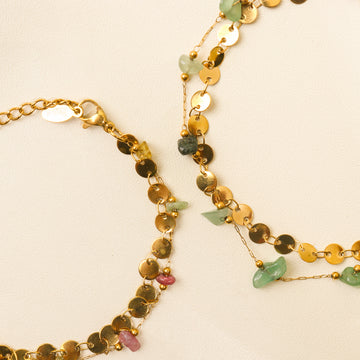
close-up photos of hardware and finishing
-
reviews that mention comfort, fit, or daily wear
If a product page shows only one styled image and gives almost no practical information, it is harder to judge comfort.
The best brands usually help you understand not only how a bracelet looks, but how it will actually feel in real life.
FAQ
What is the main reason a bracelet feels annoying?
Usually the fit. Too tight or too loose is the most common cause of discomfort, followed by weight and poor movement on the wrist.
Are lighter bracelets always more comfortable?
Often yes for daily wear, but not always. A bracelet also needs the right balance, fit, and construction to feel good.
Why do adjustable bracelets often feel better?
Because they let you control the fit more easily. That makes it simpler to find the point where the bracelet feels secure but not restrictive.
Do gemstones affect comfort?
Yes. Their size, polish, shape, and how they are strung can all influence how soft, smooth, or noticeable a bracelet feels on the wrist.
Closing
The difference between a bracelet you love all day and one you want to take off by lunch usually comes down to practical details.
Fit. Weight. Movement. Texture. Closure. Materials. Balance.
These things may not be the first things people notice in a photo, but they are often the reason a bracelet becomes part of your daily life—or gets left behind in a drawer.
Because in the end, a truly beautiful bracelet is not only the one that looks good.
It is the one that still feels good hours later.

