


Why some jewelry looks better after being worn and some looks worse
by Praijing Jewelry on Jun 05, 2026

Not all jewelry ages the same way
Some jewelry becomes more beautiful the more you wear it.
It starts to feel softer, more personal, and more connected to you. The piece settles into your daily style. It may gain a subtle character, a familiar shine, or a lived-in quality that makes it feel even more meaningful.
But some jewelry does the opposite.
After a few wears, it starts looking tired. The color fades. The shine disappears. The surface scratches too easily. The finish changes in a way that does not feel charming—it just feels worn out.
So why does this happen?
The answer is usually not one single thing. It comes from a combination of material, finishing, construction, care, and whether the jewelry was designed for real everyday use.
In this article, we’ll explain why some jewelry ages beautifully while other pieces lose their appeal quickly—and what buyers should look for before choosing a piece they want to wear often.
Jewelry that ages well is designed to handle real life
A piece that looks better after being worn usually has something important behind it: it was made with real use in mind.
It does not only look good in a product photo. It can handle contact with skin, movement, clothing, heat, humidity, and daily routines.
Jewelry that ages well usually has:
-
practical materials
-
thoughtful finishing
-
smooth edges
-
balanced construction
-
realistic care expectations
-
a design that still looks good even with light signs of wear
This is important because daily jewelry does not live in a box. It lives on your body.
It moves through your day with you. And if it is not made for that, it will usually show wear much faster.
Material is the first reason jewelry ages differently
Material plays a major role in how jewelry changes over time.
Some materials are naturally more durable and easier to maintain. Others may look beautiful at first but require more careful handling.
For example:
Stainless steel
Stainless steel is often chosen for everyday jewelry because it is durable, low maintenance, and generally more resistant to tarnish than many delicate metals. It can keep a clean look for a long time with simple care.
Sterling silver
Sterling silver can be beautiful and timeless, but it may tarnish over time. This is normal for silver and can often be cleaned or polished. It ages differently—not necessarily badly, but it requires more care.
Plated jewelry
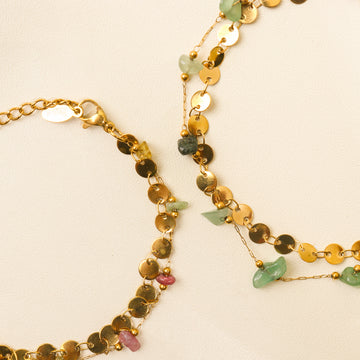
Gold-plated or coated pieces can look elegant, but the surface layer may fade with friction, sweat, perfume, skincare, or frequent wear. The quality of the plating matters a lot.
Natural gemstones
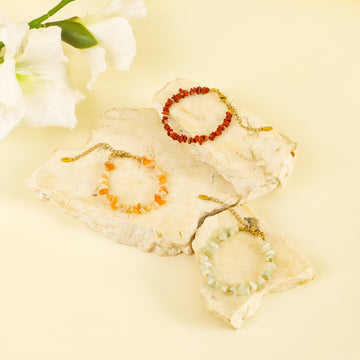
Natural gemstones can age beautifully when properly finished and cared for. Their natural variations, inclusions, and patterns often make them feel more personal over time.
The key is not to assume all jewelry materials behave the same. They do not.
Finishing changes how wear appears
The finish of a jewelry piece also affects whether it looks better or worse over time.
A polished finish may look bright and reflective when new, but it can show fingerprints and fine scratches more clearly.
A matte finish can look soft and modern, but repeated friction may slowly make some areas appear smoother or shinier.
A brushed finish often hides light wear better because the surface already has fine directional lines.
A coated finish can add beautiful color, such as gold-tone or rose-gold tone, but it needs care because the color is usually on the surface.
This is why jewelry finish matters. It affects not only the first impression, but also how the piece visually ages after repeated wear.
Good wear can create character
There is a difference between jewelry that looks damaged and jewelry that develops character.
Some pieces gain a natural softness over time. They may not look brand new forever, but they still look beautiful because the design and material can support that change.
This is often seen in pieces that:
-
have strong materials
-
use natural stones
-
have balanced proportions
-
are not overly dependent on a perfect glossy surface
-
still look intentional with light signs of use
This kind of aging can make jewelry feel more personal. It becomes part of your story, not just an object you bought.
That is why some everyday pieces become more loved the more they are worn.
Bad wear usually comes from weak material or poor design
When jewelry looks worse quickly, it often comes from one of these problems:
-
the material was too delicate for daily use
-
the coating was too thin or low quality
-
the surface scratches too easily
-
the finishing was not refined
-
the piece was exposed to sweat, perfume, or water too often
-
the design had too many fragile details
-
the jewelry was not stored properly
Sometimes buyers think they did something wrong, when actually the piece was never designed for repeated wear.
This is why it is important to know whether a piece is made for daily life or only for occasional styling.
The jewelry you wear often needs different standards
A bracelet you wear once a month does not need to meet the same standard as a bracelet you wear three times a week.
Daily jewelry needs to be judged differently.
It should be:
-
comfortable
-
durable
-
easy to clean
-
practical for your climate
-
resistant enough for movement
-
not too fragile for normal routines
-
designed with real wear in mind
This is why many people prefer stainless steel and well-finished gemstone bracelets for daily wear. They offer beauty, but they also make sense for real routines.
A piece that is meant for repeat wear should not fall apart emotionally or visually after a few uses.
Climate and skincare can affect how jewelry ages
Jewelry does not age in isolation. It reacts to the environment around it.
Everyday jewelry may come into contact with:
-
sweat
-
sunscreen
-
perfume
-
lotion
-
body oil
-
humidity
-
salt air
-
chlorine
-
skincare products
These things can slowly affect shine, color, and surface feel.
For example, perfume and sunscreen may leave residue. Sweat can affect some metals and coatings. Humidity can speed up tarnish on certain materials. Chlorine can be harsh on many types of jewelry.
A piece that ages well is usually either made from materials that can handle these exposures better, or it is cared for properly after exposure.
Simple habits can make a big difference.
Design simplicity can help jewelry age better
Jewelry with too many fragile details can look beautiful at first, but it may be harder to maintain.
Very delicate parts, sharp edges, oversized charms, weak closures, or overly complicated shapes may show wear faster or become inconvenient over time.
Simpler designs often age better because they have fewer weak points.
This does not mean simple jewelry is boring. In fact, a well-designed simple bracelet can stay beautiful for much longer because the design is balanced and easier to live with.
Good design is not always about adding more. Sometimes it is about knowing what to leave out.
Natural stone variation can become part of the beauty
Gemstone jewelry is unique because natural stones are not perfectly identical.
They may have:
-
color variation
-
inclusions
-
small clouds
-
natural lines
-
different levels of translucency
-
subtle pattern differences
For some buyers, this can feel surprising at first. But over time, these details often become part of what makes the piece special.
Natural variation can help jewelry age beautifully because it already has character from the beginning. It does not rely on being perfectly uniform.
A gemstone bracelet may become more meaningful as you notice the small details in the stone more and more.
Note: gemstone meanings are symbolic and inspirational, not medical claims.
Care is what helps beauty last
Even good jewelry needs care.
A piece may be durable, but that does not mean it is indestructible. The way you wear, clean, and store your jewelry affects how it ages.
Simple care habits include:
-
wiping jewelry after sweat or sunscreen
-
avoiding direct perfume spray
-
removing jewelry before swimming
-
storing pieces separately
-
keeping jewelry away from bathrooms and damp places
-
cleaning gently based on the material
These habits do not take much time, but they help your jewelry stay beautiful longer.
Signs jewelry may age well
A piece is more likely to age beautifully if:
-
the material is clearly explained
-
the finish looks refined
-
the design is balanced
-
the hardware feels strong
-
the surface is smooth
-
the stone quality looks consistent with the product description
-
the care instructions are realistic
-
it is designed for repeat wear
These details may not feel exciting at first, but they matter a lot after weeks or months of use.
Signs jewelry may age poorly
Be more careful if a piece has:
-
vague material descriptions
-
very thin coating with no care guidance
-
rough finishing
-
sharp edges
-
weak-looking closures
-
overly fragile decorative parts
-
only highly edited product photos
-
no information about water, sweat, or daily wear
A piece can still be beautiful, but you should understand whether it is made for occasional styling or frequent use.
FAQ
Why does some jewelry look better the more it is worn?
Because strong materials, good finishing, balanced design, and natural character can make light wear look more personal rather than damaged.
Why does some jewelry fade quickly?
Fading can happen because of low-quality coating, friction, sweat, perfume, skincare products, water exposure, or materials that were not made for frequent wear.
Does stainless steel age well?
Stainless steel is generally practical for daily wear because it is durable, low maintenance, and more resistant to tarnish than many delicate materials.
Do natural gemstones change over time?
Some gemstones may show natural variation from the beginning, and their appearance can be affected by wear, skincare, water, or cleaning methods. Proper care helps preserve them.
Can jewelry stay looking new forever?
Most jewelry will show some signs of wear over time. The goal is not always “forever new,” but aging in a way that still feels beautiful and intentional.
Closing
The reason some jewelry looks better after being worn while other pieces look worse comes down to what the piece is made of, how it is finished, how it is designed, and how it is cared for.
Good jewelry does not have to stay perfect forever. But it should age in a way that still feels beautiful.
The best everyday pieces are the ones that can live with you—through ordinary days, small routines, changing seasons, and repeated wear.
Because sometimes, the most beautiful jewelry is not the one that stays untouched.
It is the one that becomes more yours over time.

