


How stainless steel jewelry is made and why it’s so durable for daily wear
by Praijing Jewelry on Mar 16, 2026

Stainless steel is the “wear it and forget it” metal
If you love jewelry but hate the maintenance (tarnish, discoloration, constant polishing), stainless steel is usually the metal that finally makes daily wear feel easy.
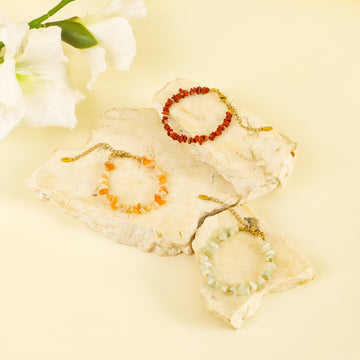
It’s clean, modern, strong, and it holds up well in real life—workdays, errands, travel, and busy routines. That’s exactly why it pairs so well with gemstone bracelets (like Praijing’s everyday styles).
This post covers:
-
How stainless steel jewelry is made (in simple terms)
-
Why it’s more durable than many common alternatives
-
What “stainless” actually means
-
How to care for it so it stays fresh
What stainless steel actually is (and why it doesn’t tarnish easily)
Stainless steel is an alloy—meaning a mix of metals engineered for strength and corrosion resistance.
The key ingredient is chromium. When chromium is present at the right level, it forms an invisible protective layer on the surface called a passive oxide layer.
That thin layer helps resist rust and slows down the chemical reactions that cause tarnish.
So “stainless” doesn’t mean “indestructible,” but it does mean:
-
More resistant to corrosion than many jewelry metals
-
Lower maintenance for everyday wear
-
Better performance in humid climates and sweaty days
How stainless steel jewelry is made (step-by-step)
Different factories use different workflows, but most stainless steel jewelry goes through a version of these steps:
1) Alloy creation (mixing the metal recipe)
Manufacturers combine base metals (primarily iron) with specific amounts of chromium and other elements to achieve the properties they want—strength, shine, corrosion resistance, and workability.
2) Melting and forming
The alloy is melted at very high temperatures and then formed into workable shapes. Depending on the product, it might be:
-
Cast into molds (useful for detailed shapes)
-
Rolled into sheets or bars (useful for parts and components)
-
Cut into smaller blanks for later shaping
3) Shaping the jewelry (cutting / stamping / CNC machining)
The jewelry piece is created by:
-
Stamping (pressing shapes from sheet metal)
-
CNC machining (precision cutting for clean edges and exact sizing)
-
Welding/assembly (joining parts)
For bracelet components, this can include links, beads, clasps, chains, sliders, or metal accents paired with gemstones.
4) Deburring and polishing (where the shine happens)
After shaping, pieces often have micro-rough edges. They’re smoothed and finished by:
-
Tumbling
-
Brushing (matte look)
-
High polishing (mirror shine)
This step affects the final aesthetic: sleek and glossy vs soft and satin.
5) Passivation (extra protection)
Many stainless steel pieces go through a process called passivation, which cleans the surface and strengthens that protective oxide layer—improving corrosion resistance and helping the metal stay brighter longer.
6) Optional coating (PVD plating) for color finishes
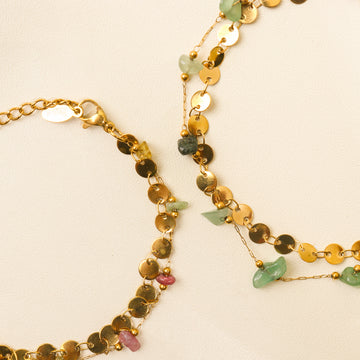
If you see stainless steel jewelry in gold or rose-gold tones, it’s often finished with PVD coating (a durable coating process that bonds a thin layer to the steel).
This is usually more durable than traditional “paint-like” coatings, but it still benefits from gentle care.
Why stainless steel is so durable for daily wear
Here’s the practical “why it lasts” part:
1) It’s highly scratch-resistant compared to many soft metals
Stainless steel is generally harder than metals like pure silver or many plated options. That means it’s less likely to show tiny dings from everyday contact.
2) It resists tarnish better than silver
Silver naturally tarnishes from exposure to air and moisture (especially in humid places). Stainless steel is much more resistant in day-to-day conditions.
3) It handles sweat, humidity, and heat better
If you live in a tropical climate or you’re active, stainless steel tends to stay looking “clean” longer with minimal upkeep.
4) It stays structurally strong
For jewelry that’s worn daily—bracelets especially—strength matters. Stainless steel holds its shape well and is less likely to bend compared to softer metals.
Why stainless steel is perfect for gemstone bracelets
Gemstones are natural—beautiful, but some stones can be more delicate than metal parts. Stainless steel is a great partner because it’s:
-
Stable and strong (supports daily wear)
-
Low maintenance (doesn’t demand constant polishing)
-
Style-flexible (looks modern, minimal, and stacks easily)
That’s one reason Praijing’s gemstone bracelets with stainless steel accents feel like true everyday pieces—pretty, but practical.
How to care for stainless steel jewelry (easy routine)
Stainless steel doesn’t need babying, but these habits keep it looking brand new:
-
Wipe with a soft cloth after heavy sweat or ocean days
-
Clean with mild soap + water, then dry fully
-
Avoid harsh chemicals (chlorine, strong cleaning sprays)
-
Store separately from rough jewelry to reduce micro-scratches
For PVD gold-tone stainless steel:
-
Avoid constant friction against hard surfaces
-
Don’t spray perfume directly on it
-
Treat it gently to keep the coating pristine
FAQ
Is stainless steel waterproof?
It handles water well, but it’s still smart to rinse and dry after chlorine, saltwater, or heavy sweat—especially if your bracelet includes gemstones or coatings.
Will stainless steel turn my skin green?
This is less common than with some plated metals. Skin reactions vary by person, sweat, and product composition.
What’s the difference between “regular” stainless steel and “surgical steel”?
Jewelry often uses higher-grade stainless steel (commonly talked about as 316L in the market) because it’s more corrosion-resistant and comfortable for many people. Exact grade can vary by brand/supplier.
Does stainless steel scratch?
Everything can scratch eventually, but stainless steel is more resistant than many softer jewelry metals. Gentle storage helps.
Closing
If you want jewelry that can keep up with real life—busy days, humidity, travel, constant wear—stainless steel is one of the best choices. It’s engineered for durability, finished for shine, and designed to stay low-maintenance.
That’s exactly why it pairs so well with gemstone bracelets in the Praijing collection: you get the beauty of natural stones, with a metal that’s built for everyday wear.

